If you run a shop, the question sounds reasonable. Retail ERP and accounting software both handle money, both produce reports, and both promise to keep the business in order. Many UK retailers buy one and quietly assume it covers the other. It does not. The gap between them is where stock goes wrong, month end drags, and customers get let down.
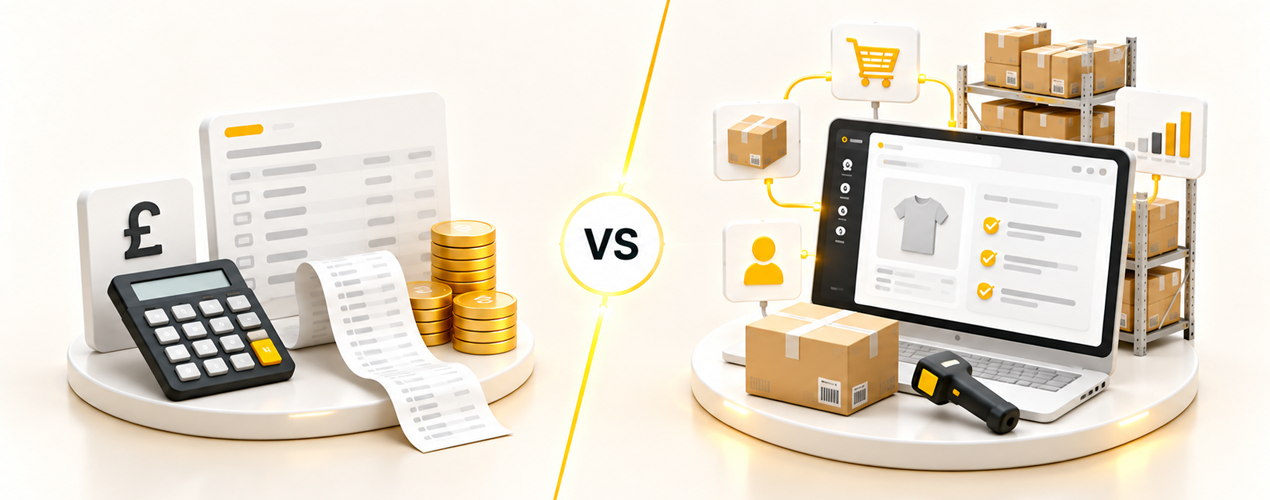
Here is the difference in one line. Accounting software records what happened to your money. A retail ERP runs what is happening to your business, and finance is only one part of that. This guide covers where they diverge and when each one makes sense.
Both tools have a place. The expensive mistake is treating them as interchangeable.
What Accounting Software Actually Does
Accounting software is a financial record. It holds the general ledger, tracks accounts payable and receivable, and reconciles bank feeds. The VAT and year end reports your accountant expects are built in. Xero, Sage, and QuickBooks cover this ground well, and most UK retailers already know one of them.
Those tools are built for the record, not the moment. You can pull last month’s sales, see what you owe, and confirm your tax position in a few clicks. For a business that mainly needs those answers, it is the right tool at the right price.
What it does not do is run operations. No accounting package will tell you how many sellable units you hold, where they live, or which orders are lagging fulfilment. The ledger stays clean while the business runs on fragments outside it.
What a Retail ERP Actually Does
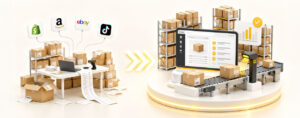
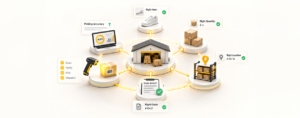
A retail ERP is an operating system for the business. It holds orders, stock, purchasing, fulfilment, customer records, and finance in one database, and every part moves in real time. When a website sale comes in, the platform deducts stock and creates the pick list. The customer record updates and the financial entry posts in the same moment. That is what the term retail ERP software means in practice.
The scope is the first clue. Accounting software covers money. A retail ERP covers money plus the operations that generate it, including omnichannel inventory, warehouse locations, procurement, and point of sale. A sale at the till moves the whole chain, not just the ledger.
The real difference is not the feature list. It is what the software was built for. Accounting software serves accountants. A retail ERP serves the people who run the shop floor, the warehouse, and the customer service desk.
Where the Difference Shows Up?
Inventory is where the two tools part company most clearly. Accounting software treats stock as a value. It sits on the balance sheet as an asset, cost of goods attached. The number changes only when someone tells the system a purchase or sale happened. The ledger can be perfectly accurate while your shelves tell a different story.
That split is common enough to have been studied. Research into a large retail chain found 65% of inventory records inaccurate at the item level (DeHoratius and Raman, Management Science, 2008). The accounts were fine. The operational truth was not.
A retail ERP treats stock as a live asset. You see sellable units per product, per location, and per channel in the moment. Every sale or return updates the picture immediately. That visibility is what removes the need for manual stock counts that arrive too late to help.
It also changes what your reports explain. Bare accounting shows that margin fell. A retail ERP shows how the margin moved, whether a supplier raised prices, shipping volumes shifted, or stock sat too long. The numbers come with their causes attached.
What the Confusion Costs You
The pattern is familiar. A retailer starts on accounting software, grows, and builds the operational layer out of spreadsheets and marketplace dashboards. Orders get rekeyed, stock gets adjusted by hand, and month end becomes a matching exercise between downloaded reports and the ledger. That is the double entry trap, and it taxes your time and your margins with every order.
None of that damage shows up in the financials, which is what makes it dangerous. The numbers reconcile and the profit and loss balances. The business still oversells, disappoints customers, and pays twice for what it never sees. There is comfort in a balanced ledger. It is the same comfort that lets a spreadsheet feel like a system.
When Accounting Software Is Enough
If order volumes are modest and you sell through one or two channels, accounting software is probably the right answer. When you can account for your stock in an afternoon, the simpler tool wins. It costs less, it is simpler, and your bookkeeper already speaks its language. Adding a full ERP at this size is overhead, not progress.
That advice matters more than the obvious sales pitch, because the software world loves a bigger system. A sole trader selling through one marketplace does not need a warehouse module. The tool should fit the operation, not the other way round.
When You Need a Retail ERP
The signal to start looking is when operations outrun the spreadsheet layer. Watch for stock that disagrees between channels and orders that need retyping. Customer service teams chase answers across three screens, and reports arrive days old. Each symptom costs money weekly. A centralised order system is usually the first fix.
Once you see those patterns, the question stops being about accounting. It becomes about having a single source of truth. This is the same logic as the all in one ERP versus multiple tools decision. One consistent record beats a patchwork that needs constant reconciliation.
The upfront investment sits higher and go live takes longer than a bookkeeping package. The trade off is scale: the platform keeps working as channels, stock lines, and fulfilment complexity grow.
Can You Run Both?
Yes, and many retailers do. Vision ERP from Sapio Systems connects with Xero, Sage, and more than 200 other tools. The platform runs operations in real time and hands the financial outcome to your accounting package. You keep the bookkeeping you trust and gain the operational layer you never had.
Think of it as the Vision ERP platform running today while the accounting software keeps the record. If you already run cloud accounting, the cloud ERP versus on premise comparison shows how UK retailers usually land.
A Simple Way to Decide
Run three checks against your operation. You can see current stock across every channel without opening a spreadsheet. Your team answers an order enquiry without switching systems. Your month end closes in days rather than weeks.
If you fall short on all three, the gap is costing more than any software subscription. Switching does not have to become the project you fear. A look at the real implementation timeline shows where the time actually goes.
Conclusion
Accounting software and retail ERP serve different jobs, and the distinction is simple once you see it. One keeps the financial record of the past. The other runs the operation in the present. Choose accounting software while your business stays small and single channel. Move to a retail ERP when stock, orders, and channels outgrow the spreadsheet layer.
If you are not sure which side you are on, talk to people who have watched both work across UK retailers. Talk to the Sapio team and describe how you run today. The right answer usually appears within the first few minutes.